
You are around 10 times more likely to die from a fire if you don’t have a working smoke alarm in your home.
Test your smoke alarms at least once a month.
Would your smoke alarm save you?
Get the facts:
- fit smoke alarms on every floor of your home, including in each bedroom
- working smoke alarms correctly positioned in your home can save your life
- have a plan for how you’d leave your home if your smoke alarms go off – make sure everyone in your home knows what it is
- do not put a smoke alarm in a kitchen or bathroom
- do not paint over a smoke alarm
- you need to replace smoke alarms every 10 years
Did you know?
- cooking appliances are the main cause of fires in the home
- around 5 accidental dwelling fires a day are started by smoking
- faulty electrical appliances cause over 3,500 fires in the home each year
- nearly 3 accidental dwelling fires a day are caused by candles
- never put a smoke alarm in a kitchen or bathroom
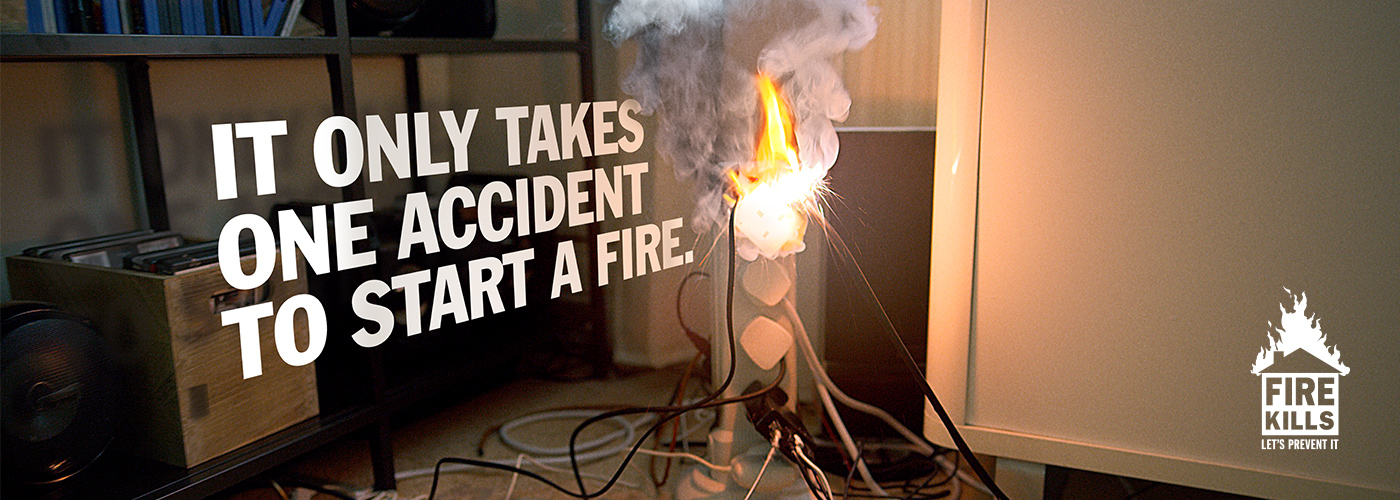
Fire safety – it only takes one accident to start a fire
Fire safety – it only takes one accident to start a fire (audio described version)
Cut the risk of fire in your home
Top tips for reducing fire risk in your home:
- take pans off the heat or turn them down if you need to leave the kitchen while cooking
- always stay in the kitchen when cooking, especially if you’re cooking with fat – never leave children in a kitchen cooking unattended
- keep matches and saucepan handles out of the reach of children
- keep tea towels and cloths away from the cooker and hob
- keep electrical appliances clean and in good working order to prevent them triggering a fire
- use one plug per socket
- keep heaters clear from curtains and furniture and never use them for drying clothes
- stub cigarettes out properly and dispose of them carefully
- put candles in a holder and keep them away from things that may burn – never leave them burning when you’re not in the room
- if your clothes catch fire, remember stop, drop and roll
- a lot of fires start at night – do some checks before you go to bed
If a fire starts, get out, stay out, call 999. Do not tackle fires yourself – leave it to the professionals.
Get more information
For more information on how you can keep you and your household safe from fire, visit the Fire England website.
Download our guides to staying fire safe in the home.